Between medieval fortifications and Renaissance elegance: the castle of Magione today
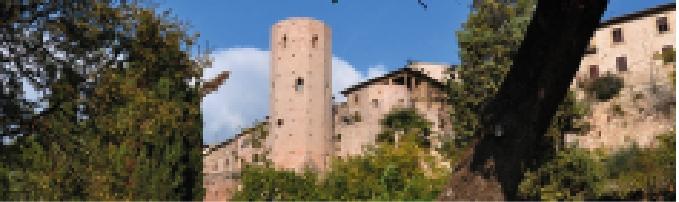
The original building had two structures arranged in an L-shape, with a bell tower above, today the only surviving part of the ancient structure. During the Middle Ages, it was fortified and transformed into a square-plan manor with corner towers, developed around a central courtyard. In the 15th century, it underwent its last and final transformation by the Bolognese architect Fioravante Fioravanti, who was active at the same time in Umbria, working on the Rocca di Montone (Fortress of Montone), the Braccesque loggias of the Perugia Cathedral, and important hydraulic works near Lake Trasimeno. The building increasingly took on the appearance of a castle, with circular towers, battlements, and a beautiful three-tiered loggia in the inner courtyard. A terracotta plaque in the loggia wall may assign the commission of the cloister's work to Cardinal Marco Barbo, commendator of the Roman priory of the Sovereign Order of Malta from 1466 to 1471.
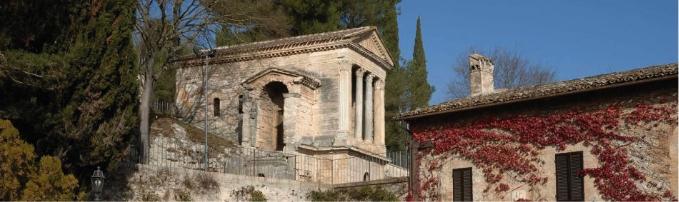
The 15th-century renovation also involved the pre-existing Romanesque chapel, obviously dedicated to St. John the Baptist, the Order's protector. In the early 16th century, Cardinal Giovanni Battista Orsini, commendator of the abbey, commissioned two frescoes from unknown painters of Pinturicchio’s workshop to decorate it: a Nativity and a Madonna with Child between Saints John the Baptist and James. The latter is depicted with his typical pilgrim attributes: staff, sack, and a hat adorned with shells, emphasizing the building's purpose. Additionally, the saint's pouch bears the coat of arms of the patron's family.
Tragic events…
In 1502, the castle hosted the Diet of Magione, also described by Niccolò Machiavelli in The Prince: a conspiracy against Cesare Borgia, Duke of Valentinois and illegitimate son of Pope Alexander VI, who harbored expansionist ambitions over central Italy. The outcome is well known: in Senigallia, Borgia had all those responsible for the conspiracy strangled. Every summer, an interesting re-enactment takes place at the castle, retracing the entire episode.
…and distinguished guests
The “Badia”, as locals call it, has always been a significant place of hospitality and rest. In 1746, Pope Benedict XIV stayed there, followed by Pope Pius VII in 1805. During the summer, it remains the residence of the Grand Master of the Order of Malta, who signals his presence by flying his flag from the tower: a white octagonal cross on a blue background.