
Via di Francesco: from Florence/Rimini to Assisi - La Via di Francesco

St Francis Way in Umbria: from Florence/Rimini to Assisi
Stages from Sansepolcro to Assisi
St Francis Way in Umbria: from Florence/Rimini to Assisi
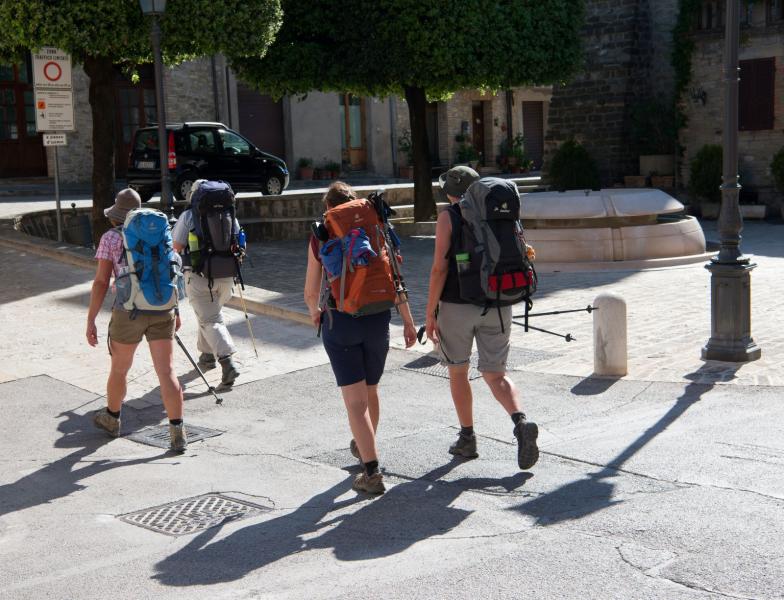
WalkingThe figure of Saint Francis, who towers over Assisi, destination and crossroads of the most important paths, accompanies the pilgrim on the paths that start from different parts of Italy and Europe, intertwine in Umbria and have only one destination: the tomb of the Santo in Assisi and its Papal Basilicas. Along the way, we retrace the streets of medieval cities, churches, hermitages and convents, and works of art that preserve the memory of his words and deeds and embody the identity of Italy and its population.
From Florence and Rimini, the Way converges at the Sanctuary of La Verna in the Casentinesi Forests National Park. From the Sacred Mount of La Verna, the route continues towards the gentler hills of the Upper Tiber Valley in Umbria, passing through the towns of Citerna, Città di Castello and Pietralunga.
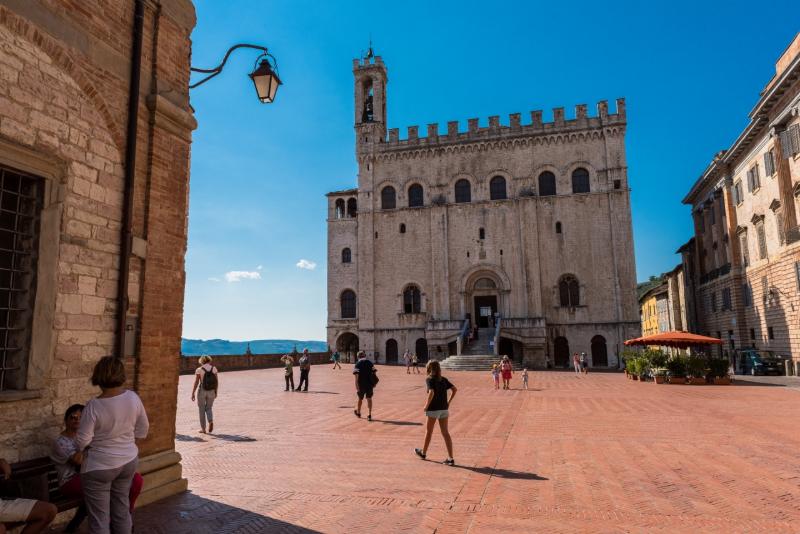
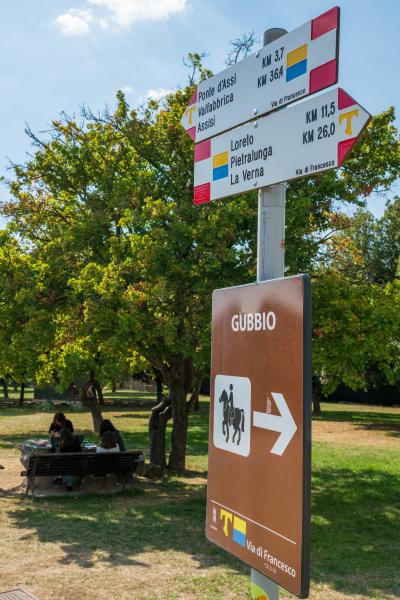
You will reach Gubbio, which is rich in natural beauty and artistic treasures and is the place of St Francis' first pilgrimage.
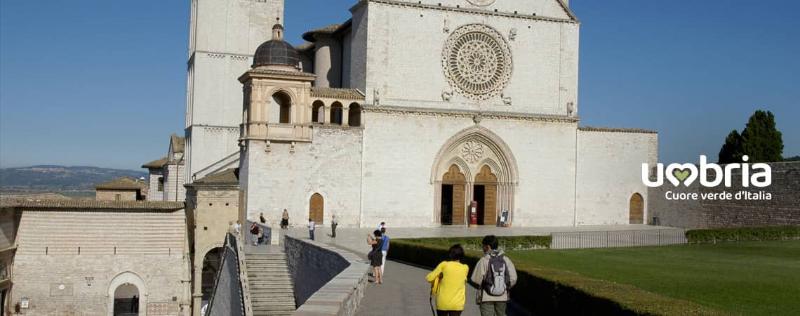
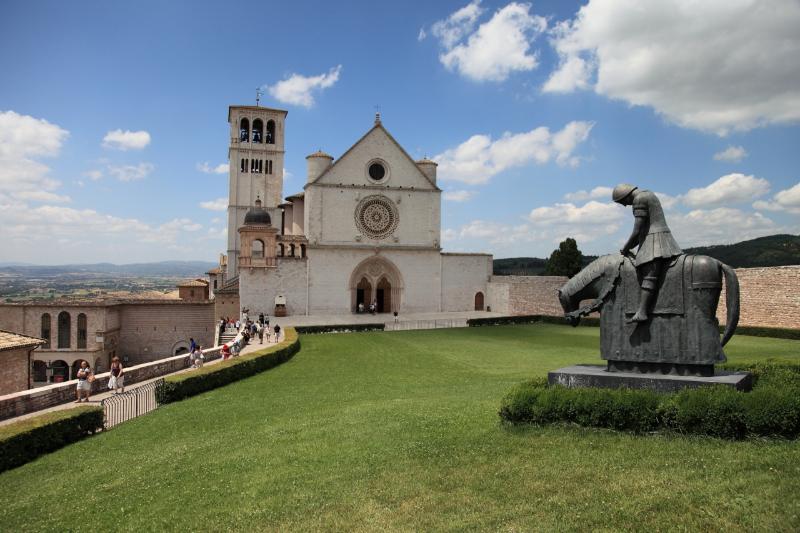
With uphill and downhill climbs, you will cross the green territory of Valfabbrica until you reach the Basilica of St Francis of Assisi, which is the most famous place in the world representing the history and life of the Patron Saint of Italy.
You can go on interesting detours around Perugia, the regional capital, in which there is a wealth of exceptional monuments.
To discover and learn more about the stages of the Ways of Francis in Tuscany and Emilia Romagna:
Ways of Saint Francis in Tuscany - Click here
Ways of Saint Francis in Emilia Romagna - Click here
Stage 10
Stage 11
Stage 12
Stage 13
Stage 14
Stage 15
Stage 15a
Stage 16
Stage 16a
Stage 16b
-
asphalt : 85%
-
dirt road : 15%
This route lasts approximately 4 hours, mainly on flat ground between the cultivated fields and ancient country houses. Moving away from the town, you need to watch out for the traffic, but in less than 3 km you will be walking along country roads to reach the land of St. Francis: Umbria. The uphill slopes become less steep and the landscape becomes gentler. The Village of Citerna, which is considered one of the most beautiful villages in Italy, stands on a hill in the Upper Tiber Valley and has the characteristics of a fortification functioning as a watchtower. Places worth visiting in the old town centre are: the church-museum dedicated to St. Francis (ask someone to tell you the mysterious story of the discovery of the Madonna di Donatello); the Church of San Michele Arcangelo, in which you will find the precious Crucifixion by Pomarancio and a Madonna with Child of the Della Robbia school; a visit to the unusual medieval walkway within the walls is a must.
-
asphalt : 30%
-
dirt road : 70%
Amid the horse chestnuts, oaks and downy oaks you will tackle uphill and downhill stretches without any steep slopes. AThis route is about 20 km long and has a pleasant pace. From the rugged Apennine landscape of the previous legs, it takes you to the gentler landscape of the Upper Tiber Valley. long the Way there are resting areas and drinking fountains where you can get food and water, among which there is a buffalo breeding farm that produces delicious mozzarella cheese. Once you have reached the ridge of the hills in the locality of Le Burge, you can enjoy a 180° view of the Tiber Valley and the Umbrian landscape, featuring hills, hillside villages, woods and churches. Several stretches of the route are in the sun and pilgrims should never be without a hat and a water bottle. In the locality of Lerchi you will walk alongside the “Arboreal Archaeology” foundation (which can be visited by booking) in which there are ancient local varieties of fruit plants, preserving the biodiversity of the area.
Along the way, a votive shrine and an iron cross indicate to us the Franciscan hermitage of Buon Riposo, which gets its name from the fact that St Francis stopped here. The last stretch is downhill and leads to the simple, elegant façade of the Cathedral of Città di Castello, which welcomes pilgrims on their way to Assisi. Città di Castello always had a very important cult of art: important artists worked here and solemn buildings and monumental churches were built, like the Cathedral, St Dominic and St Francis. Città di Castello is the home of one of the greatest Umbrian artists of the 20th century, Alberto Burri, whose works can be found in the town's two museums. Not to be missed is the Diocesan Museum, where the Treasure of Canoscio is kept, one of the most ancient existing collections of objects for liturgical use, dating back to the Early Christian era.
-
asphalt : 20%
-
dirt road : 78%
-
unpaved : 2%
The stamps on the pilgrim's credential continue to increase and, step by step, the destination moves closer. On this stage of the journey, the linear geometry of the squares of Città di Castello are left behind and you will walk through the woods and often in the sun to reach the little town of Pietralunga.Approximately 6 km after departure, you will reach the locality of Il Sasso, a resting area and above all the last place for stocking up on food and water. From here, the gradual uphill climb begins and then the descent until you get to a “place of the heart” along the Way: Pieve de’ Saddi, centre of the first Christianization of the Upper Tiber Valley and, for centuries, a religious centre for the entire mountain area. The path continues on with uphill and downhill areas through valleys and fields where the silence and peacefulness of the areas regenerate the spirit. Along the trail, there are various resting areas, for regaining your strength and allowing you to tackle the continuous uphill and downhill route to Pietralunga, where you can enjoy tranquillity and a warm welcome in this little Umbrian village. Because of its length, you should take your time on this leg, taking advantage of the intermediate stop-over places. We advise to you to save your energy for the last descent, followed by an uphill climb to Pietralunga.
-
asphalt : 65%
-
dirt road : 35%
Along St Francis' Way there are different ways of shortening this leg of the journey, while the churches and abbeys, even if closed, offer the possibility to stop and rest in the shade of the trees. You can walk without difficulty through the forests and open meadows, which offer sweeping views of the surrounding hills, and then cross the forest of conifers. The trail continues on along a tarmac road and, suddenly, the splendid plain around Gubbio opens up, where the horizontal lines of the fields cross the vertical lines of the poplars along the irrigation channels.Once you reach the locality of Loreto, the landscape changes: the silent forests give way to the cultivated fields and the villages. You will reach a tree-lined panoramic viewpoint next to the church of San Giovanni Battista (usually closed, but the kind caretaker lives opposite the church).You continue on downhill, until you reach the locality of Abbadia di Piazza, where you carry on along a secondary road, alongside which there are majestic oak trees. From here, a long stretch in the sun and on the tarmac begins and you will come across the new "Fonte del Pellegrino" (Fountain of the Pilgrim), a gift to wayfarers from the Parish Church of San Venanzio in Sermonte - Rione del Piano - in the Diocese of Gubbio. Your arrival in Gubbio is a reward for your efforts, not only because of the beauty of the place, but because of the strong bond that unites St Francis to the town.The Way ends in front of the church of St Francis, where there is an endearing statue of Francis and the wolf, in memory of the miraculous taming of the ferocious beast by the Saint. If you can spend a day in Gubbio, it is worthwhile walking around the town circuit known as the Path of "Fratello Lupo" (Brother Wolf), which allows pilgrims to visit the Franciscan places in the town, the "second home" of the Saint from Assisi.
-
asphalt : 20%
-
dirt road : 80%
There are numerous accommodations to break the distance of the journey. Along this road Saint Francis proclaimed himself "herald of the Great King" in the face of the brigands who beat him up. He arrived in a monastery (Vallgeni Abbey), where he was reluctantly welcomed and put to work as a kitchen boy.
Saint Francis, as a pilgrim, faced numerous challenges and difficulties, but it is these that make the journey unique for anyone who decides to follow in his steps. The first stretch out of Gubbio is on asphalt and you need to be careful. You then continue on a dirt road and, having reached the ridge, it is worth turning around to say goodbye to Gubbio.
Continue through the valley of the Chiascio River and the castles located at the top of the slopes. In the distance, on clear days, you can glimpse the mass of Mount Subasio. You reach the small church of Ripe or Madonna delle Grazie, one of the most heartwarming places on the Via, where the memories of the passage of pilgrims are preserved. Stop here and meditate.
Afterwards, you start to climb through coniferous woods to reach the Hermitage of San Pietro in Vigneto. In this area you will receive a pilgrim’s welcome.
-
asphalt : 20%
-
dirt road : 70%
-
unpaved : 10%
We continue the challenging climb up to the Biscina Castle, the last point where we can stock up on water. From here on it is almost all downhill to Valfabbrica. This last stretch, however, is on asphalt and under the sun, always remember to wear a hat and a supply of water. Be careful along the path, because you will come across a crossroads. From the crossroads you can decide whether to follow the signs towards the Franciscan parish church of Coccorano. This route is longer, but offers unexpected views of the artificial Chiascio basin. The stop at the parish church repays the effort. As an alternative to the previous crossroads, continue downhill along the dam (check the route on the short variant no. 15 a). The wait is almost over and Valfabbrica is a Franciscan Monte do Gozo where you can meditate on the journey that will be fulfilled in Assisi in front of Francis’ tomb.
-
asphalt : 25%
-
dirt road : 65%
-
unpaved : 10%
The route shown here represents a shortcut, which reduces the km. Less interesting from a landscape point of view, but certainly shorter. The wait is almost over and Valfabbrica is a Franciscan Monte do Gozo where you can meditate on the journey that will be fulfilled in Assisi in front of Francis tomb.
-
asphalt : 25%
-
dirt road : 75%
The route starts in the silence of the hills and woods, and then from Pieve San Niccolò the landscape opens up over the valleys with olive groves and vineyards. The first stretch is in the forest and you will have to tackle a few challenging uphill areas in the woods. This leg of the journey is a compendium of the route covered: uphill and downhill stretches, some quite steep, but the nearness of Assisi brings new energy to your legs. Suddenly, you will notice the harmonious and majestic Sacred Convent and the Basilica of St Francis as one with the city of Assisi.This is one of the most beautiful moments of the journey, which foretells the joy of your arrival. Once you reach Assisi on foot, in the locality of Ponte de Galli, there is the lower point of access to the Bosco di San Francesco (Forest of St Francis) of the FAI (Italy's National Trust – make an offer to enter), which you can cross as an alternative to the uphill tarmac road. You enter Assisi from Porta San Giacomo, through which the pilgrims left the town on their way to Santiago de Compostela.The majestic façade of the Basilica of St Francis, when lit up by the sun, is the first reward of the journey. The great moment has come: you only need to reach the Saint's tomb. Here, in the soft everlasting light, pilgrims can gather their thoughts in prayer and meditate about the journey they have been on. Next to the entrance to the Lower Basilica, there is the Statio Peregrinorum, where you can collect your well-deserved Testimonium (for those who have travelled 100 km on foot or 200 km by bike) or the Chartula Peregrini, which will allow you to remember your journey forever.
-
asphalt : 60%
-
dirt road : 27%
-
unpaved : 1%
Going to Perugia, capital city of the Umbria Region, allows you to discover one of Umbria's most beautiful cities of art. Here, the modernity and vitality of the city coexist with the proud medieval past, which left behind it absolute artistic and architectural masterpieces. From Valfabbrica, the journey is mainly on tarmac road, between the fields of olive trees and various residential areas. You begin with a gradual, smooth uphill stretch towards Monte Verde: step by step, the view opens up onto the narrow valley of Valfabbrica.First you reach Pianello, where you can stop for refreshment, and then you continue on to the castle of Ripa. You cross the village lengthways until you get to the Panoramic viewpoint over the little Piazzetta del Montarone, from which you can recognize Assisi and the Basilica of Santa Maria degli Angeli. You continue on along the tarmac road, touching the residential areas of Lidarno, Ponte Valleceppi and Pretola. From the tower of Pretola the long and challenging climb begins, taking you to the area of the Templar church of San Bevignate and then into the Acropolis of Perugia.
-
asphalt : 90%
-
dirt road : 5%
-
unpaved : 5%
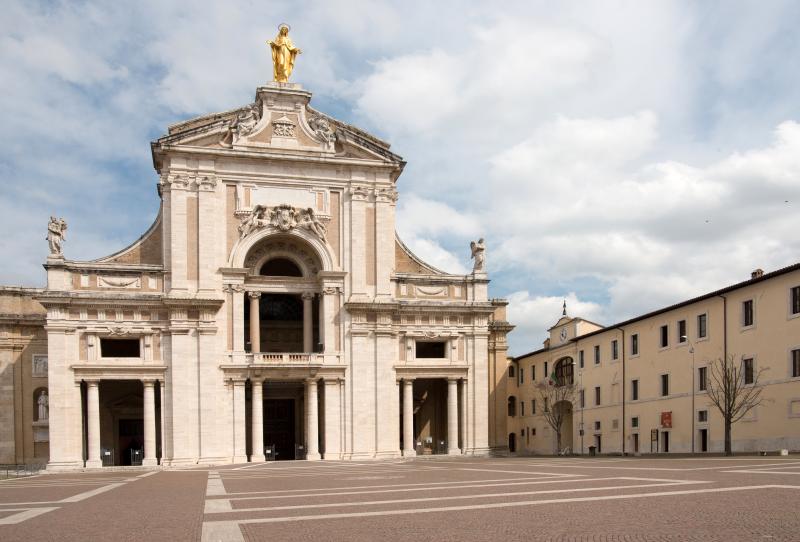
The journey takes you through densely inhabited areas, although the charm of the invocation remains. In fact, on the way from Perugia to Santa Maria degli Angeli, St Francis explained to Friar Leone what the “perfect joy” was and how to achieve it. Also along this stretch of the journey, the “Peace March”, conceived by Aldo Capitini in 1961, takes place.The route starts from the old town centre of Perugia and descends towards the valley. Once you have reached Ponte San Giovanni, after a stretch along the Tiber river, you continue along a tarmac road and partly on a dirt road until you reach Santa Maria degli Angeli. A visit to the places in which the presence of the Poverello d'Assisi (Poor man of Assisi) and the Order of Friars Minor can still be felt is a must. From the basilica, you take the Strada mattonata (Brick road). From here, we can see our destination: the Basilica of St Francis. The Brick Road continues on and, after a flight of steps, you turn left in order to reach Porta San Pietro and Assisi. After crossing the square you will get to the Basilica of St Francis, where the journey comes to an end in front of the tomb of St Francis.
This stage leads through the places of early Franciscan origins along a mostly flat route. It invites reflection on the relationship between spirituality, agricultural landscape and historic settlements, following the traces of Saint Francis and the first friars. The return from Cannara can be made on foot or by public transport. Leaving Assisi, the route enters the Bosco di San Francesco, a natural area restored and managed by FAI. The passage through the wood represents a first immersion in the Franciscan message of respect for creation and harmony between humans and the environment. Entry to the FAI woodland requires a donation to support conservation activities; alternatively, a public pedestrian route can be followed.
After leaving the wood, the route leads to the Basilica of Santa Maria degli Angeli, which houses the Porziuncola, a central place of Franciscan spirituality. Here Francis understood his vocation, welcomed his first companions and laid the foundations of the Order. Visiting the Basilica and the Porziuncola is an essential step and a moment that allows a deeper understanding of the meaning of the journey.
Continuing on, the route reaches Rivotorto, where the remains of the Tugurio, the dwelling of the first friars, can be found. This place conveys a concrete image of the simple and communal life that characterised the early Franciscan movement. The path then continues across the Umbrian plain, among cultivated fields, canals and rural roads, in an open landscape that encourages a steady and reflective pace.
Arrival in Cannara introduces the walker to a village rooted in the agricultural traditions of the valley, famous for the Onion Festival, with opportunities for rest and refreshments. From here, a short final stretch leads to Piandarca, traditionally associated with the famous Sermon to the Birds. In this open setting, immersed in the valley landscape, one perceives one of the most universal aspects of Francis’s message: the fraternal relationship with all living creatures.
Due to its altimetric characteristics, the stage is easy. The distance of about 25 km invites a slow pace, allowing time for visits and stops along the way. This section of the Via di Francesco combines accessibility, historical value and spiritual meaning, offering a balanced experience between walking, knowledge and landscape. The route can be organised over one or two days. From Cannara it is also possible to return to Assisi by public transport, making the stage easily manageable as a linear itinerary.
The route retraces, in reverse, the final journey of Saint Francis, from Assisi towards the territory of Nocera Umbra, undertaken in the days preceding his death. It follows silent paths, largely shaded by the forests of the Mount Subasio Park, immersed in a landscape that invites slowness, listening, and reflection. Those who choose to continue beyond Nocera Umbra, passing through the Franciscan hermitage of Romita to Bagnara di Nocera Umbra and the Angel’s Cave, are rewarded with the discovery of evocative and authentic places, far from mass tourism routes.
This stage holds strong evocative value, linked to an episode of great importance in the life of the Saint. According to the Franciscan Sources, when the Municipality and the Bishop of Assisi learned of his imminent death, they sent a solemn delegation of knights to Bagnara. Francis was thus escorted on horseback towards his hometown, where he would experience the Transitus.
The route begins in Assisi and, passing the Rocca Minore, gradually leads the walker into increasingly secluded environments, offering wide views over the Tescio Valley. The path provides glimpses of the Rocca of Assisi, as well as vineyards and olive groves shaping the landscape, and allows for a short detour to the Church of Satriano, built in 1926 by the Company of Knights on the site of the former village of Satriano, where Francis and the knights stopped along the way.
Beyond the Termine Pass, one encounters the ruins of the Rocca of Postignano, once the castle of the Counts of Nocera, and the still-inhabited village of Villa Postignano, which depended on the castle and was primarily devoted to agricultural functions.
After passing Villa Postignano, the route reaches Nocera Umbra. Saint Francis passed through this town several times due to its strategic position as a junction along the Via Flaminia towards Fano and as access to a shorter route towards the Marche region. Evidence of his passage remains in one of the city’s medieval gates dedicated to him and in the Church of Saint Francis, now the Municipal Art Gallery.
The journey continues towards Bagnara, crossing places of worship such as the hermitage of Romita. This place, imbued with spirituality, has welcomed Francis’s followers since the earliest times and hosted the Saint himself in the summer of 1226. From here, one can enjoy the silence and peace typical of the places loved by the Saint, along with a splendid view over Nocera Umbra and the Topino Valley, down to Bagnara.
Immediately after the hermitage, the route passes through the medieval village of Le Cese, restored following the 1997 earthquake. From here, a short detour leads to the evocative waterfalls of the Topino River, known as the Cascate de le Ferce. The path descends towards Bagnara, and after about 1 km, the marked trail to the waterfalls begins. Immersed in woodland, it leads to the watercourse and the five cascades formed by the river over time.
From the Cascate de le Ferce, the trail climbs back to the road along the Topino Valley, and following it towards Bagnara, one soon reaches the hamlet. The Franciscan Sources recall how, in the final days of his life, the Saint was brought to Bagnara to find relief from his suffering thanks to the healthy climate and the presence of waters believed to have healing properties. From here, he was reached and taken by the knights, who accompanied him back to Assisi.
After visiting Bagnara, walkers are encouraged to continue to the Cave of Saint Angelo. This ancient mountain sanctuary, set against Mount Pennino, stands beside a natural cave from which a copious spring flows. It was here, in the summer of 1226, that Saint Francis stayed: gravely ill, he was brought here to benefit from the “stilla” shortly before his Transitus.
At the end of the stage, walkers can stop at one of the accommodation facilities in the municipality of Nocera Umbra.